
 View on Asset Store (opens in new tab)
Package details
- Latest version
- 1.2.0
- Last updated
- First released
- Unity version
- 6000.3.12 or later
- Package size
- 525 KB
- Files
- 45
- Views in the past week
- 8
Price tracking
- Last checked
- Tracked since
- Lowest recorded
- $24.99 on
Keywords

OSL Social Login - Unified Provider Integration
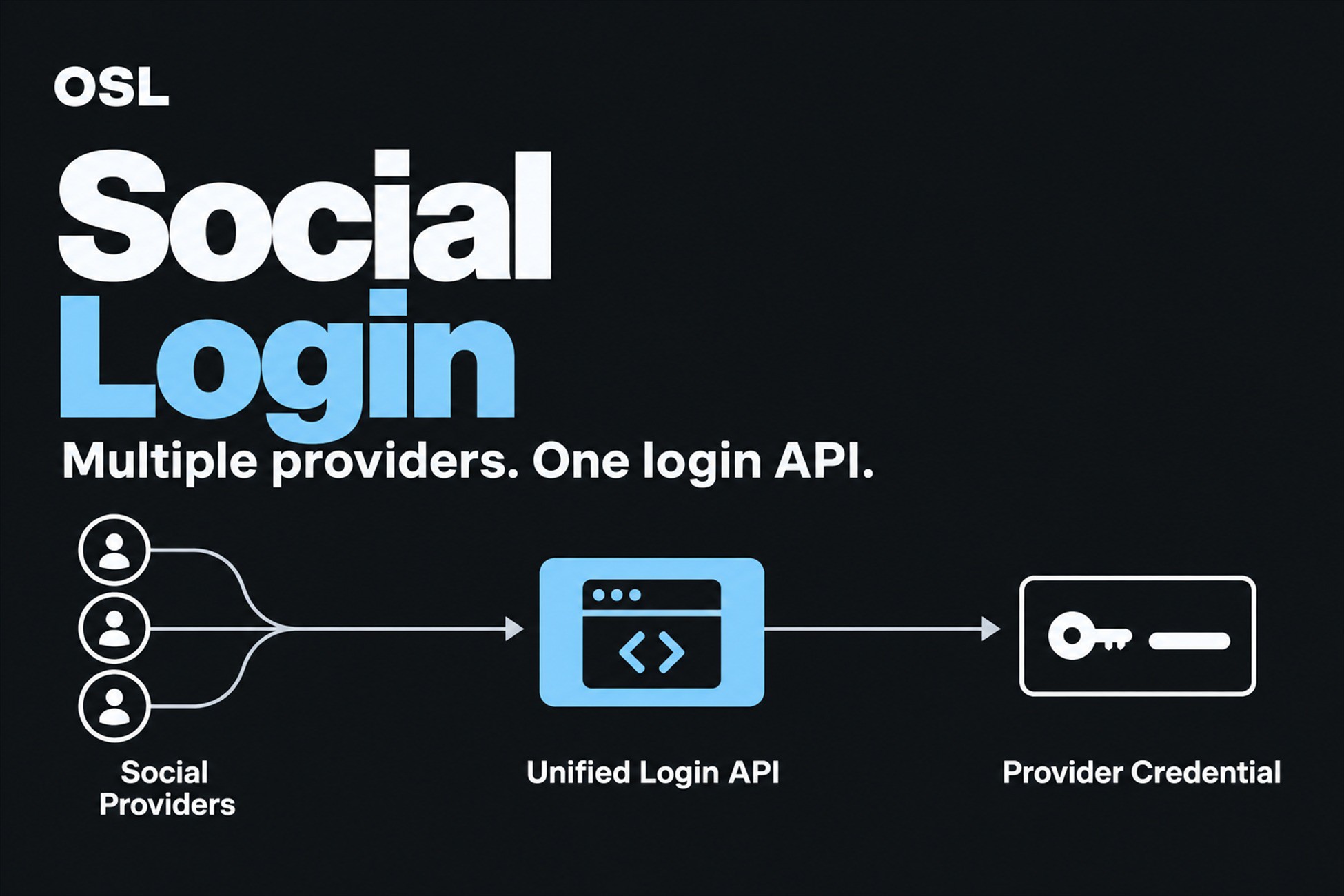
A unified Unity social login layer that reduces provider integration work with one API, selective activation, centralized setup, and build automation.
Affiliate link · Purchases support this site
Price history
Last 6 months
USDAsset preview
1 / 5
OSL Social Login - Unified Provider Integration screenshot 1
About this asset
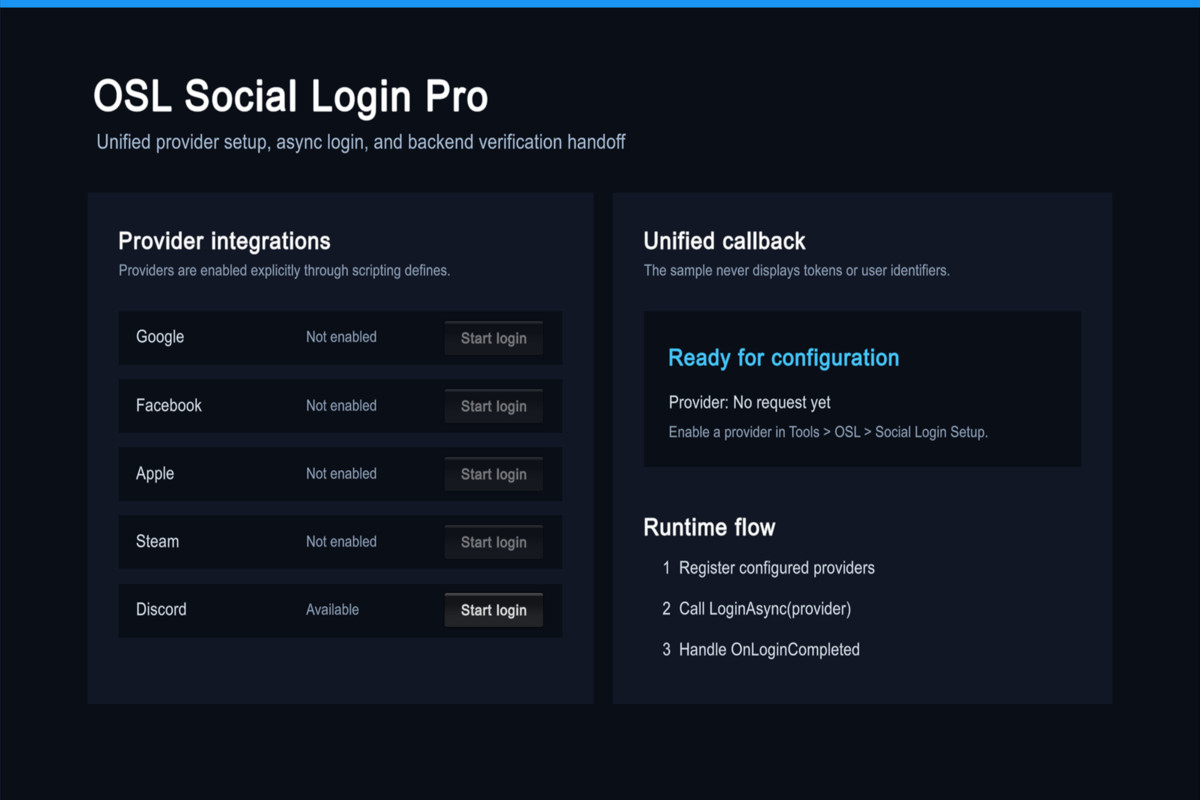
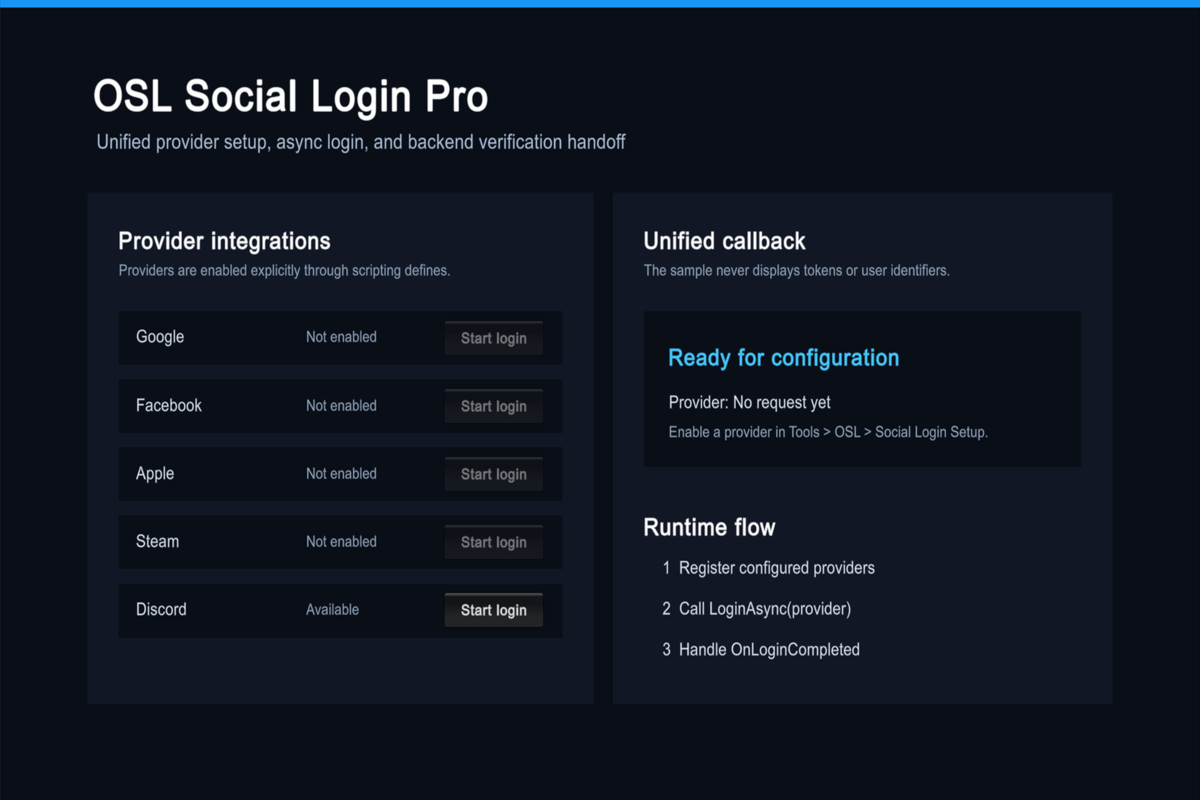
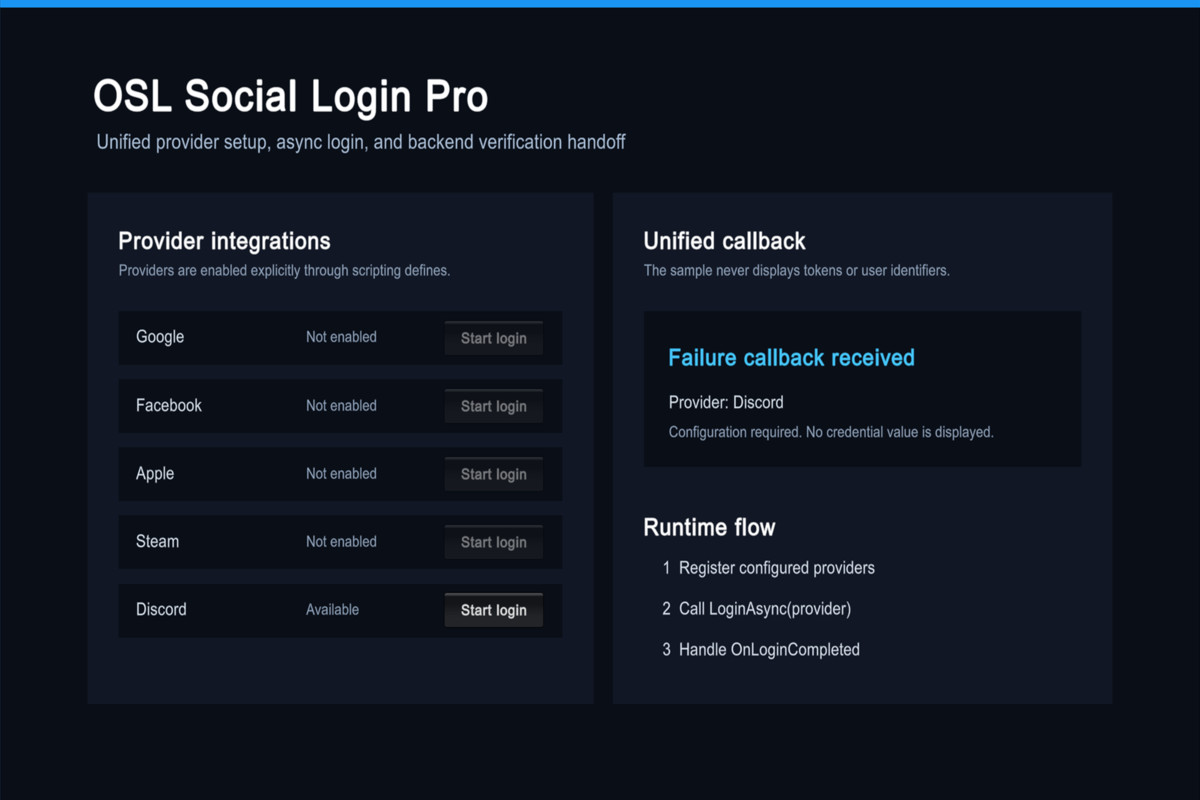
OSL Social Login is for Unity teams integrating more than one identity provider and wanting to keep provider-specific setup out of gameplay code. It presents Google, Facebook, Apple, Steam, and Discord adapters through one interface, with centralized settings, conditional activation, and provider-specific build steps.
Why / Key Benefits
- Keep one game-facing contract: Use `ISocialLoginProvider` and `SocialLoginManager` instead of spreading provider callbacks across gameplay systems.
- Enable providers independently: Provider defines compile the corresponding adapter only when it is selected and its prerequisites are available.
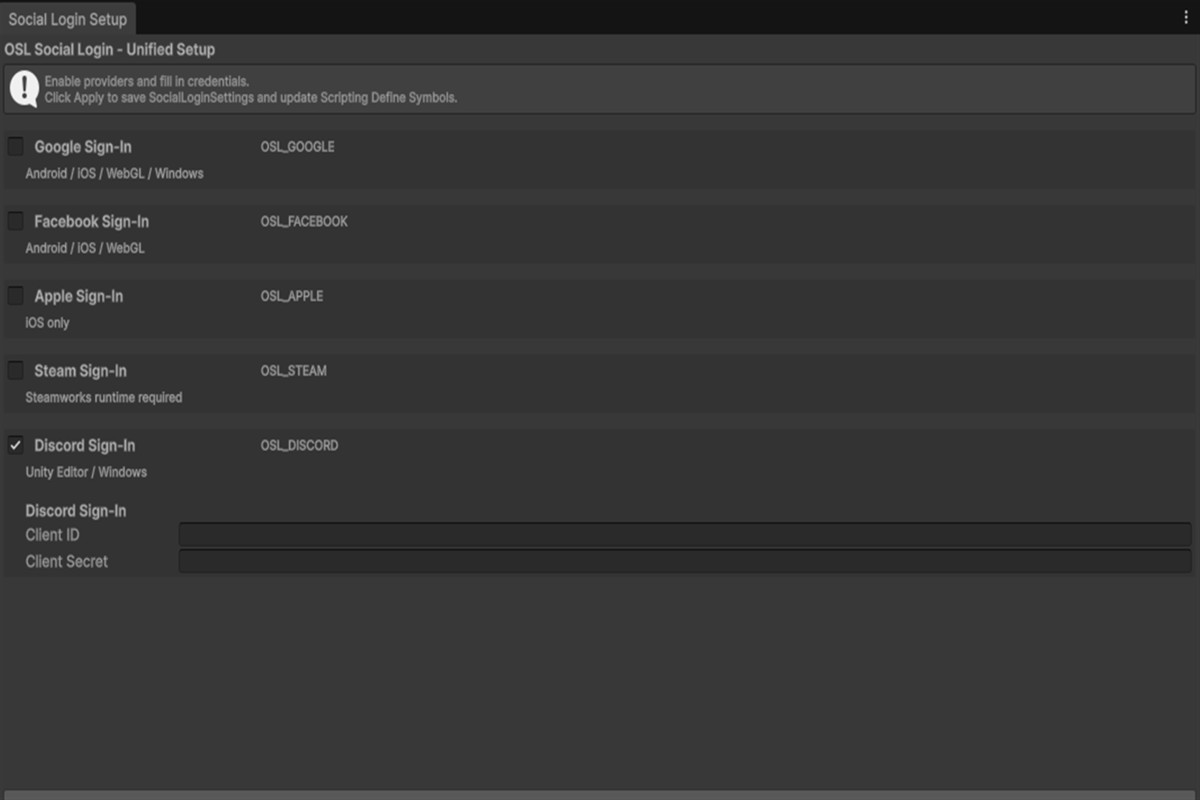
- Centralize setup: Select providers and enter only the active target's required ID from the Social Login Setup window. Validate explains missing values before it changes defines.
- Reduce build configuration work: Included build processors update supported Android and iOS project settings for the configured providers.
- Retrieve backend-ready credentials: Receive identity tokens, access tokens, authorization codes, or Steam session tickets for verification by your own backend.
Typical Workflow
1. Install the vendor SDK or runtime required by the providers you intend to use.
2. Open `Tools > OSL > Social Login Setup` and configure only those providers.
3. Let the setup tool apply provider defines and supported build settings.
4. Request sign-in through the unified manager and forward the returned credential to your backend.
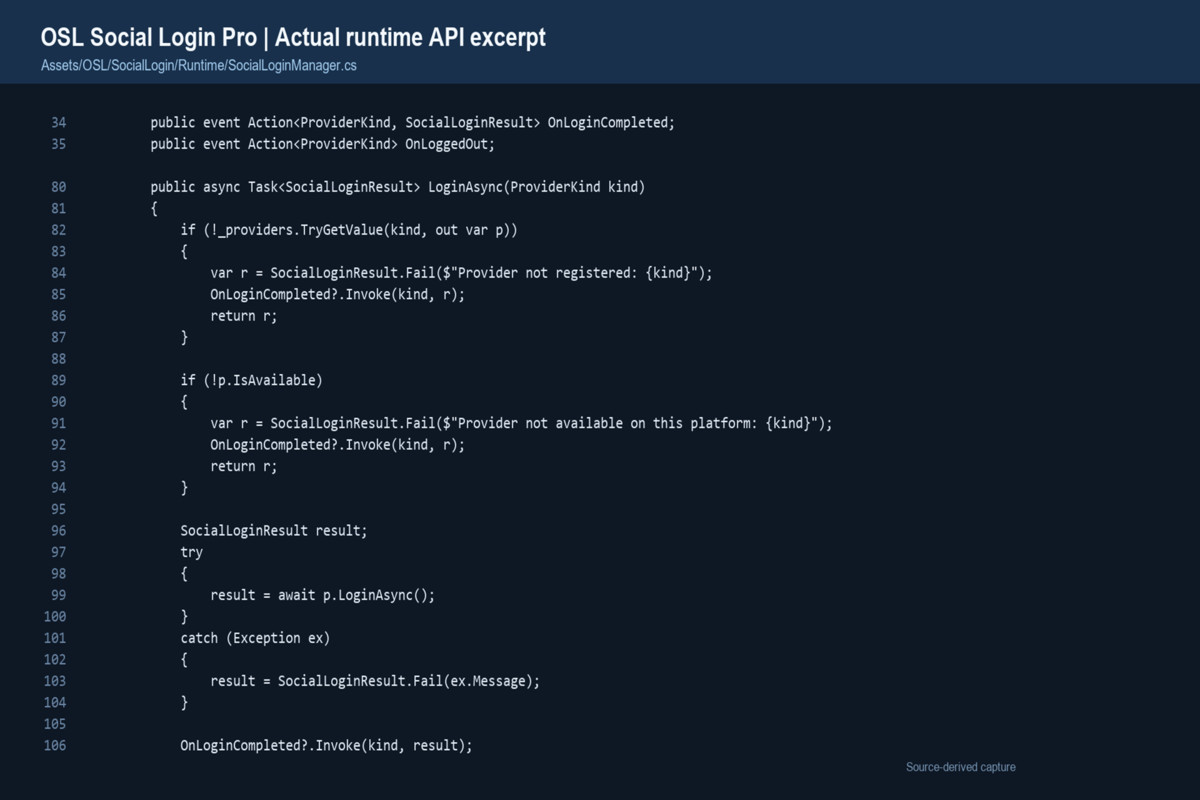
The normal call remains `await SocialLoginManager.Instance.LoginAsync(ProviderKind.G)`, then `result.Token`. Typed credentials, timeout and cancellation are optional advanced controls; basic users do not need to branch on credential kinds.
Requirements
- Minimum Unity Version: Unity 2021.3 LTS
- Tested Unity Versions: Unity 2021.3.45f2 and Unity 6000.3.12f1 (package-isolation import and compile, including the Google and Discord define paths together)
- Provider prerequisites: Provider-specific developer accounts, credentials, redirect configuration, and any required vendor SDK/runtime
- Steam adapter: Included Facepunch/Steam native runtime targets Windows x64 and requires a running, signed-in Steam client
- Discord loopback adapter: Unity Editor and Windows standalone code path; registered loopback redirect ports 50000-50009
- Google Windows: Desktop Client ID only. The package uses PKCE S256 and state validation and does not store or transmit a client secret.
Limitations / Scope
- The package acquires provider credentials; it does not make a client login callback trustworthy. Verify credentials on a backend before creating a trusted game session.
- Soft dependency defines isolate provider code at compile time, but included bridge/native files and vendor SDK packaging still need to be reviewed for the chosen build target.
- Provider dashboard setup, store entitlements, consent configuration, and platform approval remain the developer's responsibility.
- Real provider-console callbacks and sign-in with live accounts were not exercised by the local compile validation.
Documentation & Support
From the publisher's Asset Store listing.
Technical details
- API design: `SocialLoginManager` resolves provider adapters that implement `ISocialLoginProvider`. `LoginAsync(ProviderKind)` and `SocialLoginResult.Token` remain the basic contract; typed credentials and `SocialLoginRequestOptions` are optional advanced controls.
- Conditional compilation: `OSL_GOOGLE`, `OSL_FACEBOOK`, `OSL_APPLE`, `OSL_STEAM`, and `OSL_DISCORD` define the provider code compiled for the active build target group.
- Editor setup: The Social Login Setup window shows the active target's required identifier, validates actionable setup errors, then applies the corresponding scripting defines. Client secrets are not serialized for Google Windows or Discord.
- Build processing: Android and iOS processors update the provider-specific manifest, `.androidlib`, URL scheme, entitlement, or `Info.plist` settings implemented by the package.
- Steam: The included Facepunch integration and `steam_api64` native binary target the Windows x64 path and require the Steam client at runtime.
- Browser loopback: Google and Discord standalone adapters use `HttpListener` only in the Unity Editor or Windows standalone compilation path. Google uses PKCE S256 plus state validation; Discord probes ports 50000-50009 and validates state. The manager has a 180-second default timeout, cancellation, and per-provider duplicate suppression.
- Local validation: blank projects imported and compiled SocialLogin in Unity 2021.3.45f2 and 6000.3.12f1 with `OSL_GOOGLE` and `OSL_DISCORD` enabled together. This is compile evidence, not live OAuth-console or account-flow evidence.
- Trust boundary: Credentials returned by adapters are intended to be sent to an independent backend verification service before a trusted application session is created.
Compatibility
| Unity version | Built-in | URP | HDRP |
|---|---|---|---|
| 6000.3.12f1 | Compatible | Compatible | Compatible |
As listed on the Asset Store.