
 View on Asset Store (opens in new tab)
Package details
- Latest version
- 1.3.5
- Last updated
- First released
- Unity version
- 6000.3.10 or later
- Package size
- 65.3 MB
- Files
- 5,971
- Favorites
- 24
- Views in the past week
- 52
Price tracking
- Last checked
- Tracked since
- Lowest recorded
- $30.00 on
Keywords
- Search for Game Infrastructure
- Search for Flow System
- Search for Screen Management
- Search for Modular Systems
- Search for Maintainable Code
- Search for UI Foundation
- Search for Domain Driven Design
- Search for Production Ready
- Search for Clean Architecture
- Search for Scalable Architecture
- Search for Game Architecture
- Search for game foundation

Serenity - Game Systems Foundation
A modular Unity foundation for building UI, menus, flows and settings that integrates cleanly without replacing your architecture.
Affiliate link · Purchases support this site
Price history
Last 6 months
USDAsset preview
1 / 20
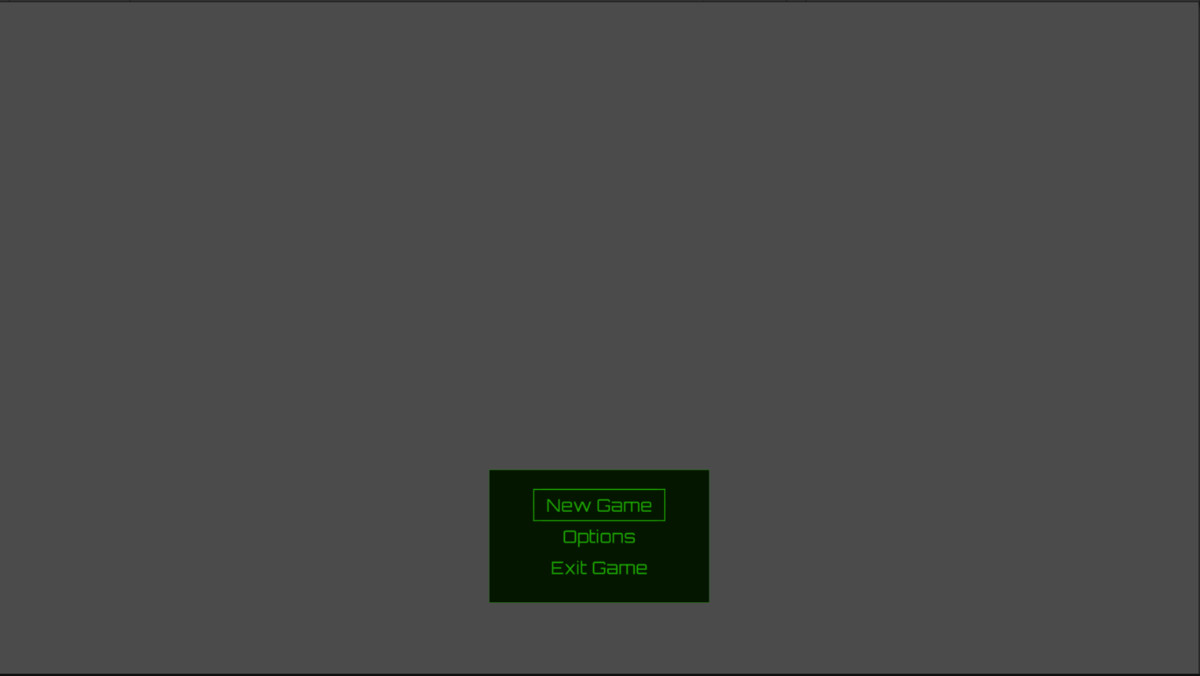
Serenity - Game Systems Foundation screenshot 1

About this asset
Serenity – Game Systems Foundation
You didn't get into game dev to build the same main menu for the fifth time.
But here you are. Again. Wiring up settings screens. Re-coding a save system. Fighting the audio mixer. Building a pause menu that talks to an input system that talks to a localization layer that breaks the moment a designer renames one key. Three months in, and you still haven't built your game — you've rebuilt the plumbing every studio rebuilds, badly, under deadline.
And when it finally "works"? It's a house of cards. One singleton reaches into another. A tiny change to the menu breaks the audio. Your designers can't touch anything without a programmer babysitting them. You know it's fragile. You ship it anyway, and you pay for it in every patch.
Serenity ends that.
Serenity is a production-grade game systems foundation built on Clean / Hexagonal Architecture — 45 modules, every one split into engine-agnostic Domain/Application logic and a Unity adapter layer, wired by a Service Locator and a signal-driven event bus. No spaghetti. No god-objects. Change one system without detonating the other five.
Stop rebuilding. Start shipping.
Out of the box you get the systems every game needs and every project reinvents:
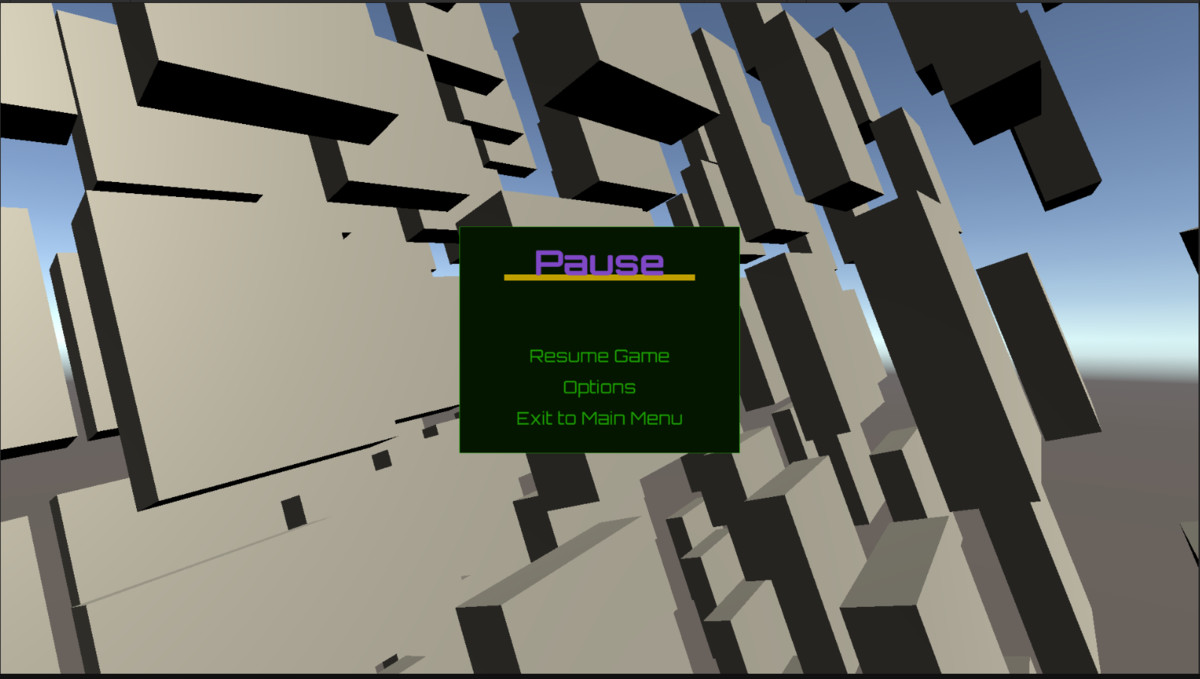
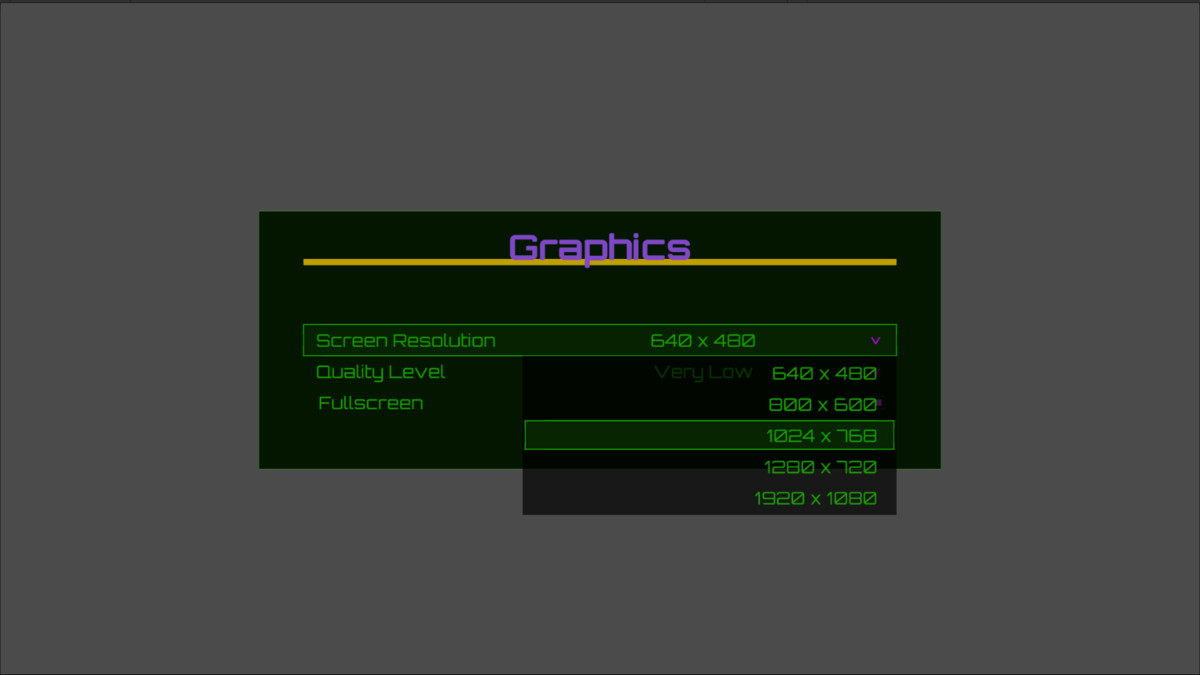
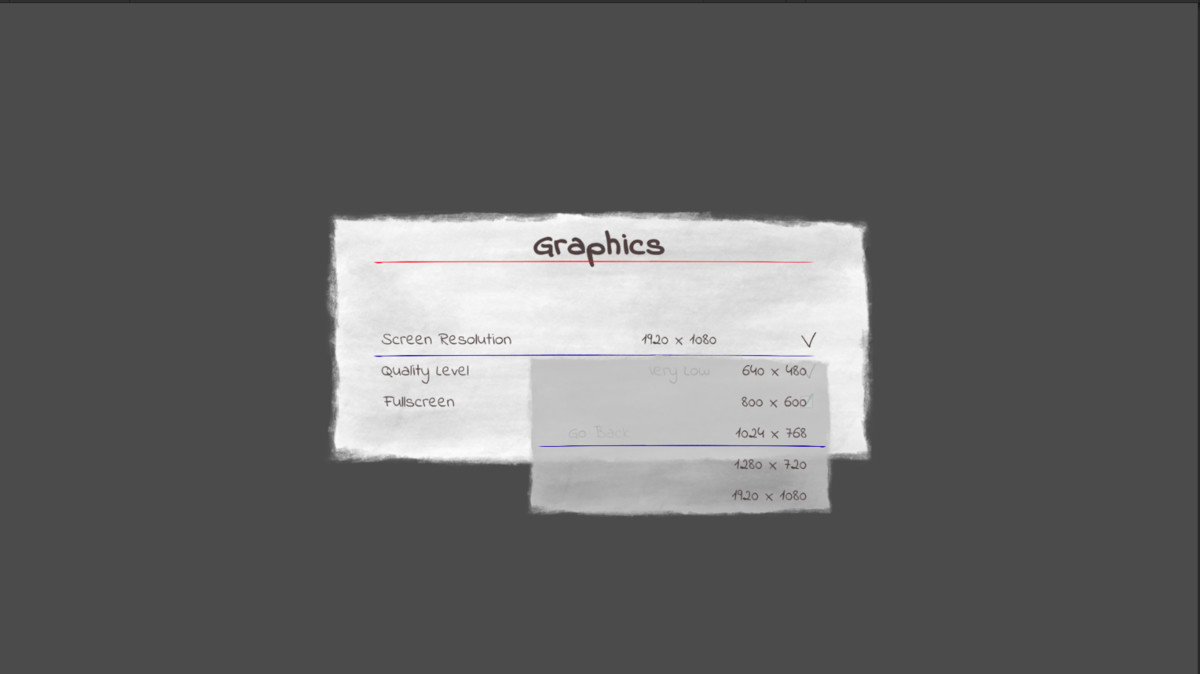
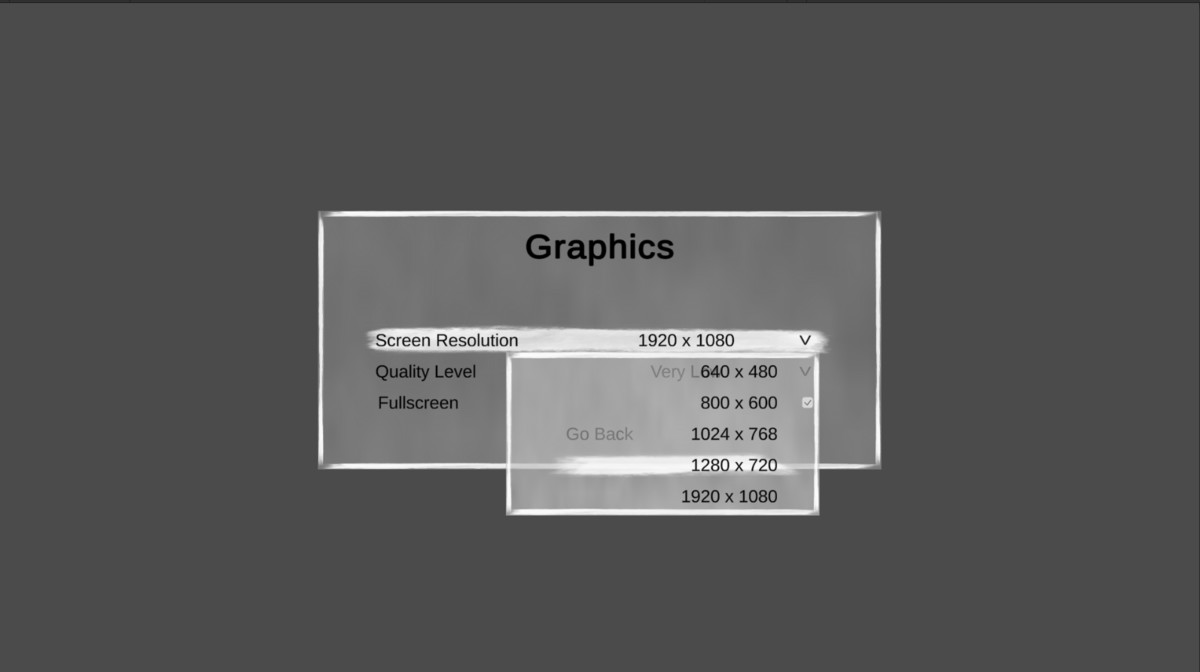
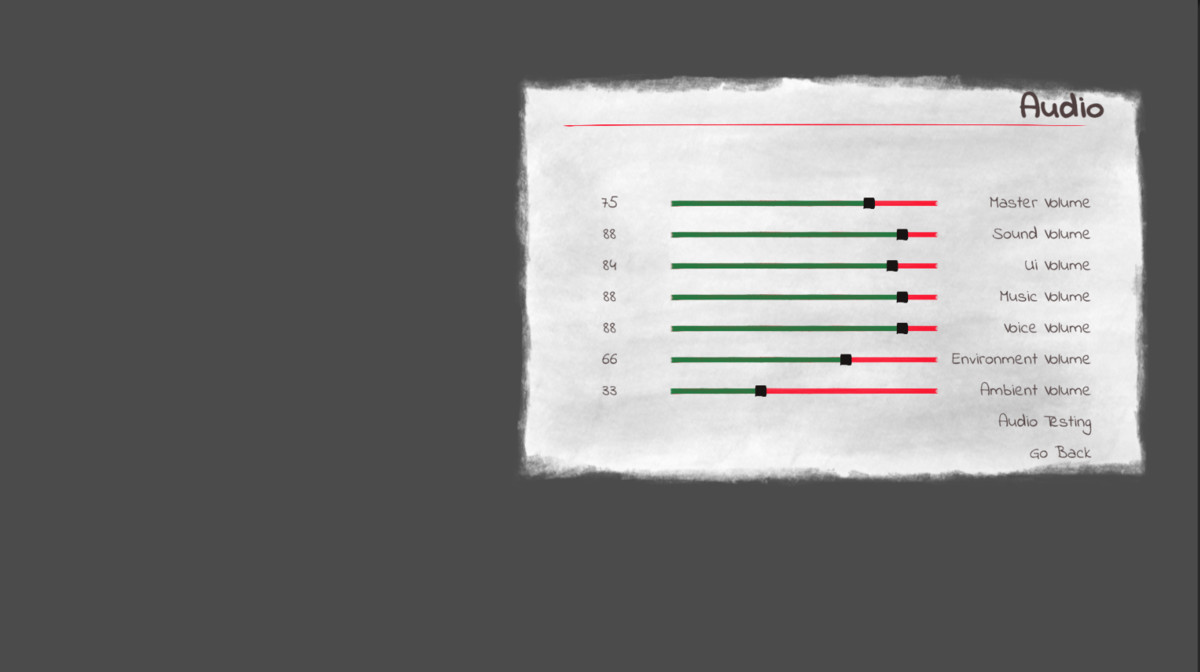
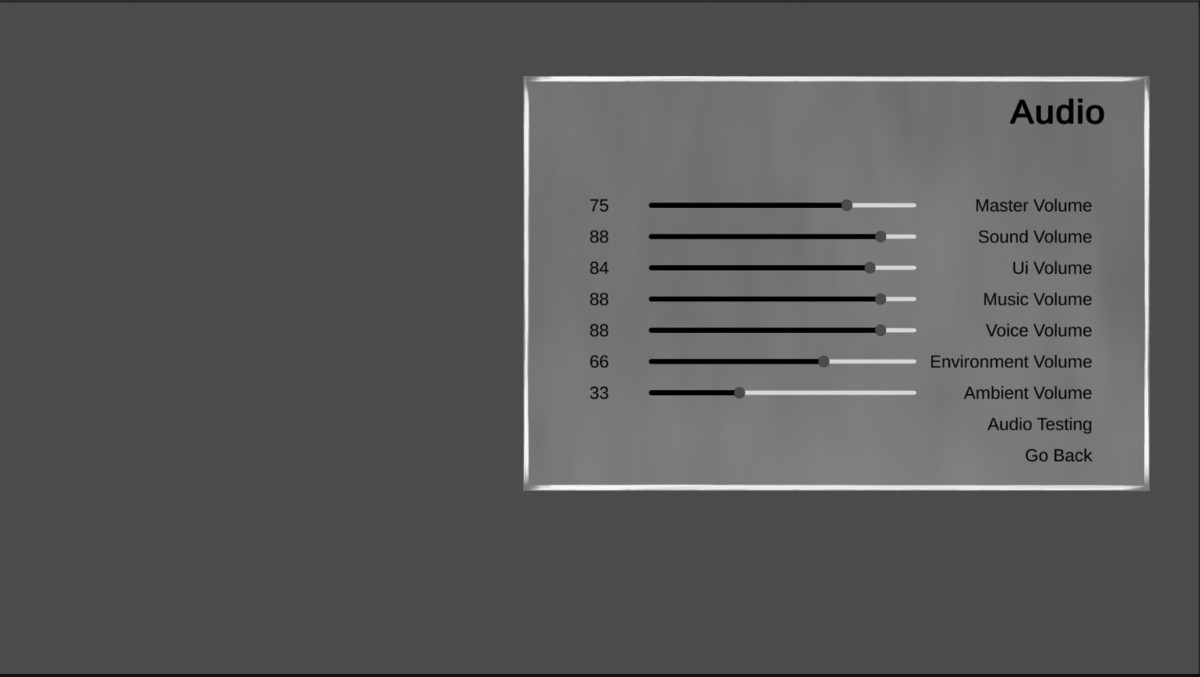
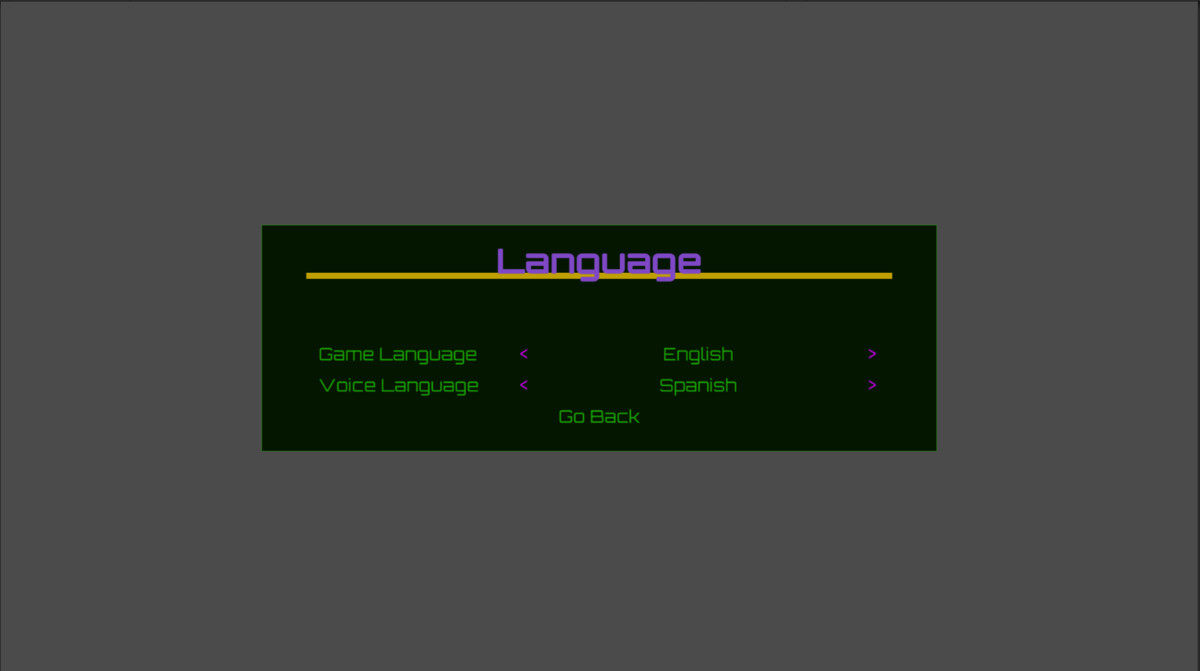
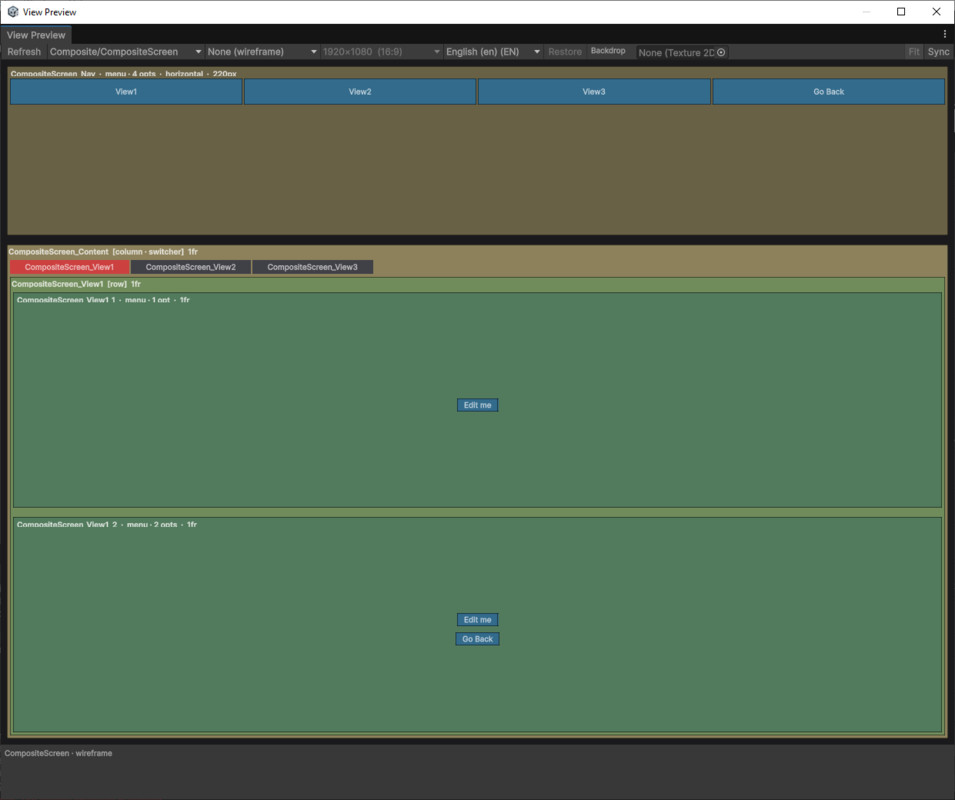
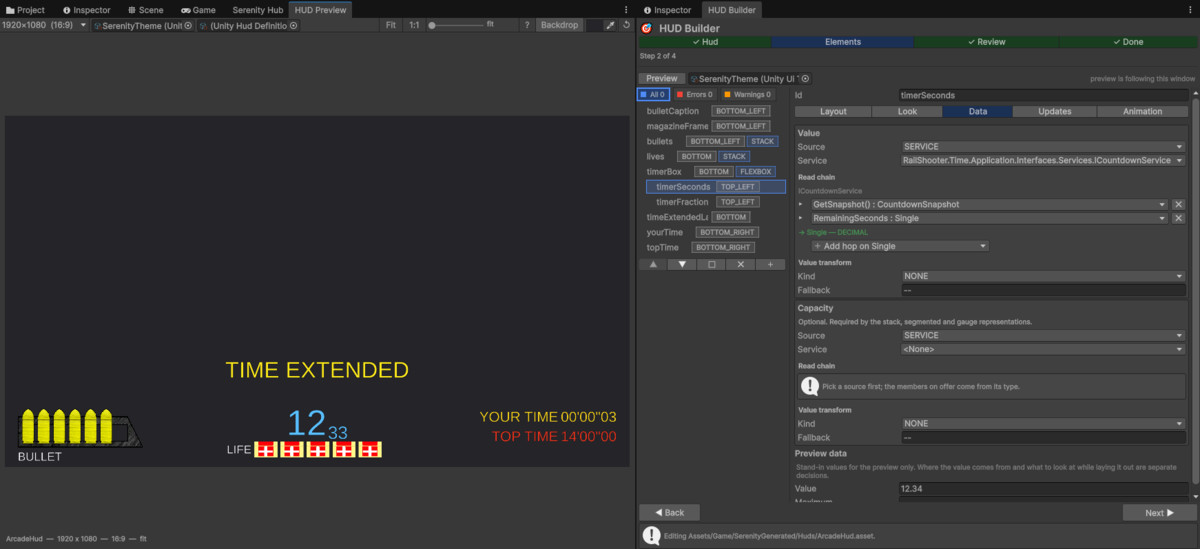
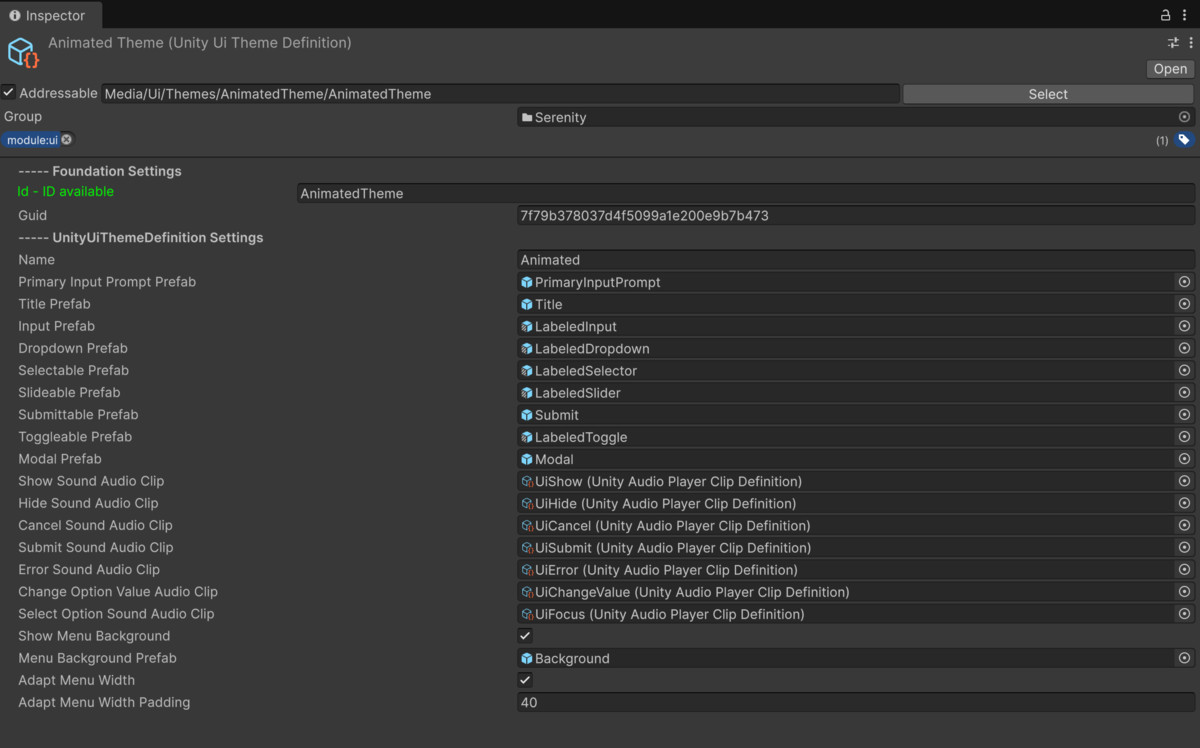
- UI that scales — menus, modals, cascade (drill-down) menus, a flexbox composite-view system, a Theme Builder wizard that generates full themes from scratch, 8 themes, and a live preview window (wireframe and themed render, at any resolution) so you see the screen before you press Play.
- A data-driven HUD with a visual builder — health bars, ammo counters, timers and any live stat, authored as data: nine screen anchors, seven display styles, automatic player-2 mirroring, and fifteen ready-made animation presets that fire on value changes or signals. Drag, scale and rotate elements in a true editing preview — every gesture a single undo step.
- Achievements — declarative unlock conditions, progress tracking, unlock screenshots captured in the background, a themeable achievements screen, a toast on every unlock, and storefront mirroring through a Steam gateway validated against the real Steamworks SDK (Xbox, Epic and PlayStation gateway templates included).
- Leaderboards — a five-step wizard builds the whole stack: pick a preset, pick the score your game already tracks, pick where the data lives — device storage, JSON files, embedded SQLite, your own HTTP service, or a direct Postgres/MySQL/MongoDB connection — and get a themed, ready-to-navigate leaderboard screen. Deterministic ranking, proper tie handling, and a misconfigured backend falls back instead of breaking your game.
- Game saves & permanent progress — configurable save slots, each an extensible document of typed sections; slot menus list label, timestamp and completion without loading whole saves; checkpoint quicksaves ride the active slot; and permanent progress (completion counts, unlocked extras) survives slot deletion. Cloud saves are a backend choice, not extra code.
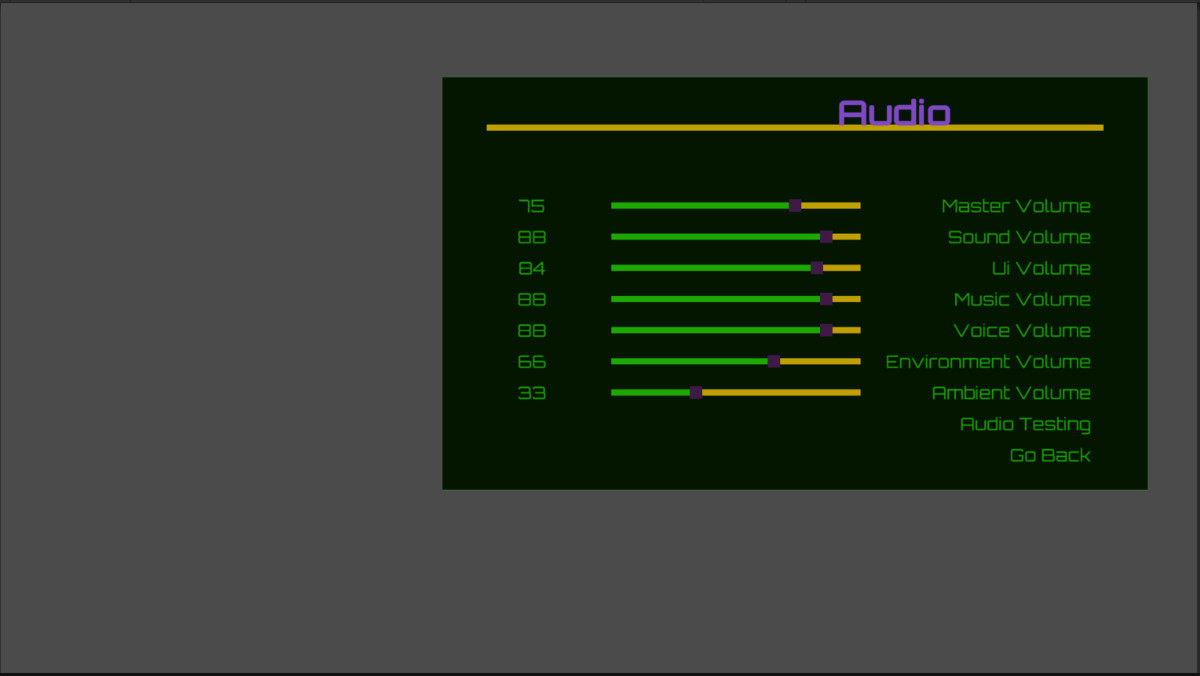
- Complete audio — player, music with loop-points/BPM/tail-fade, a routed mixer, 3D/positional audio, and batch import. Audition clips without entering Play mode.
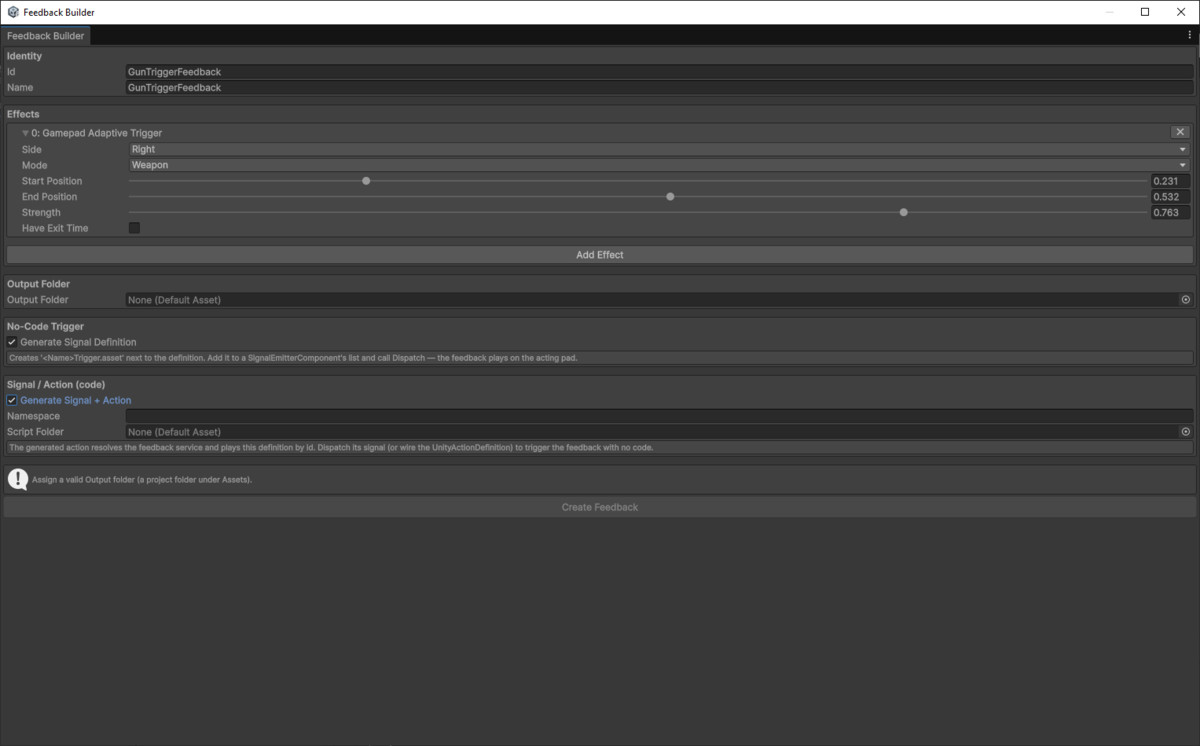
- Game-feel that AAA studios charge for — a full Feedback system: gamepad vibration, DualSense LED + adaptive triggers, screen shake, hit-stop and screen flash — driving DualSense, DualShock 4 and Switch Pro over USB and Bluetooth, on Windows and Linux. Now with gyro (motion) support on all three pads, drift calibration included. The stuff that takes weeks of HID reverse-engineering. Done.
- Settings & input — a stepped Settings Wizard, full Input System integration with per-player rebinding for local multiplayer, and player-facing Gyro Aim & Sensitivity options out of the box.
- Localization, cutscenes & gameplay — Unity Localization with a missing-key validator, a Cutscene Wizard with Timeline support, plus gameplay modules (waves, stages, characters, spawners, score, combo, checkpoints) you compose instead of code.
- Zero to playable in minutes — the Serenity Hub is the package's front door, rebuilt as a full workspace: favorites, recents, and Ctrl+K search across all 89 tools. The Setup Assistant scaffolds a full boot → menu → gameplay → pause loop in a 5-step wizard, and Validate Everything aggregates every project validator into one report with one-click fixes.
Your designers will finally stop waiting on you.
Build whole UI screens, author menus and modals, design animated HUDs, wire signals to reactions, trigger feedback and cutscenes, import audio in bulk — all in the Inspector, zero C#. Signal Reaction binders. Health-check dashboards. Broken-reference reports. A visual Signal Flow diagram showing every signal's dispatcher and reactions. An Animation Hub that finds, edits and live-previews every animation in the project on the actual model. Safe Asset Delete, which warns you before deleting a ScriptableObject something else still references. The no-code surface real teams actually need.
Built for the AI era.
Serenity ships a declarative recipe system: author your entire project as human-readable .serenity-recipe.json and let an AI agent generate validated, idempotent, reversible ScriptableObjects through the Editor API — no hand-written .asset files, no corrupted GUIDs.
Headless validation and discovery dumps let an agent confirm the project is wired correctly and self-correct. And the new AI Prompt Builder interviews you about what you want to build and generates the optimal prompt for your agent — grounded in your project's real assets, delivered to the clipboard, a file, or straight into your agent.
Built from the ground up for the AI era — so you can direct an agent to assemble your project, not just autocomplete snippets.
Trust it, because it's tested.
Over 14,000 automated tests (5,160 EditMode + 8,982 PlayMode), plus a standalone 6,200+ test suite that runs the entire Domain/Application layer in seconds without launching Unity — the concrete proof that the architecture is engine-agnostic. AI-facing documentation for all 45 modules — every system documented end-to-end, nothing left to guess.
You can keep rebuilding the plumbing. Or you can install Serenity and build your game.
From the publisher's Asset Store listing.
Technical details
Architecture
- Clean / Hexagonal architecture — 45 modules, each split into Domain (engine-agnostic) / Application / Installation, with a parallel Unity adapter layer
- Decoupled by Service Locator + signal-driven Event Dispatcher (no hard references between systems)
- Over 14,000 automated tests (5,160 EditMode + 8,982 PlayMode) + a 6,200+ test engine-agnostic Domain/Application suite that runs with plain dotnet test, no editor
Included systems (40 modules)
- UI: Menus, Modals, Cascade (drill-down) menus, Composite flexbox views, 8 themes, live in-editor preview (wireframe + themed render, multi-resolution), Toast notifications, View Browser back-navigation
- Audio: Audio player, Music player (loop-points / BPM / tail-fade), routed Sound Mixer, 3D/positional audio, mixer effect loops, batch import, in-editor audition
- Feedback / Game-feel: Gamepad vibration, DualSense LED + adaptive triggers, screen shake (camera + UI), hit-stop, screen flash — no-code triggerable
- Cross-platform gamepad output: DualSense, DualShock 4, Switch Pro over USB and Bluetooth, on Windows and Linux (raw-HID with CRC32 reports)
- Progression & competition: Achievements (declarative conditions, unlock screenshots, themeable screen, Steam gateway validated against the real Steamworks SDK, Xbox/Epic/PlayStation templates), Leaderboards (deterministic ranking, tie handling, themeable view), Score, Game Progress (permanent unlocks)
- Save & persistence: Game Save slots with typed sections and checkpoint quicksaves, structured persistence backends — PlayerPrefs, Local File (JSON), embedded SQLite, HTTP, Postgres, MySQL, MongoDB — one setting to switch
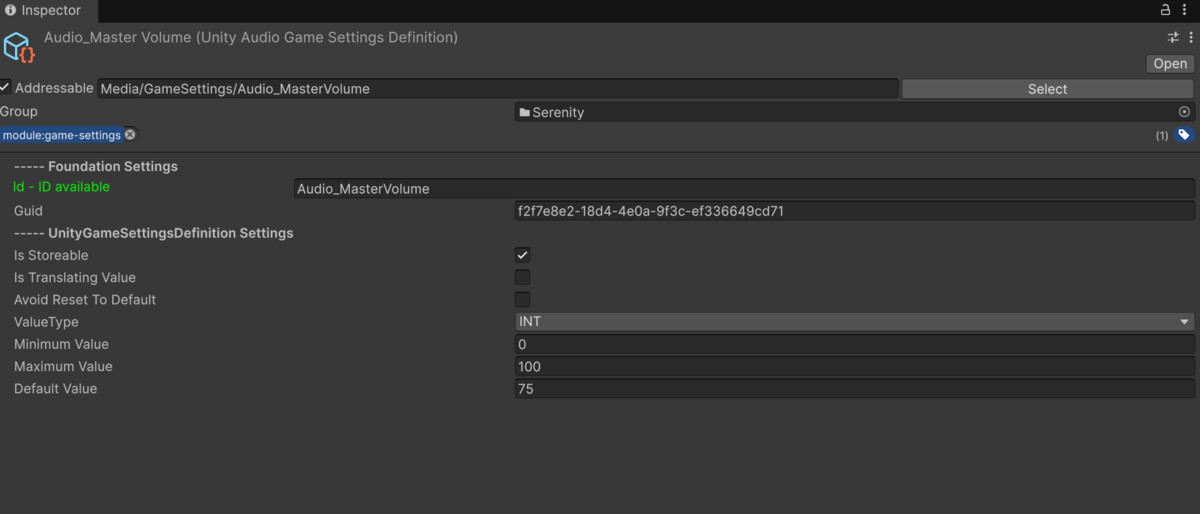
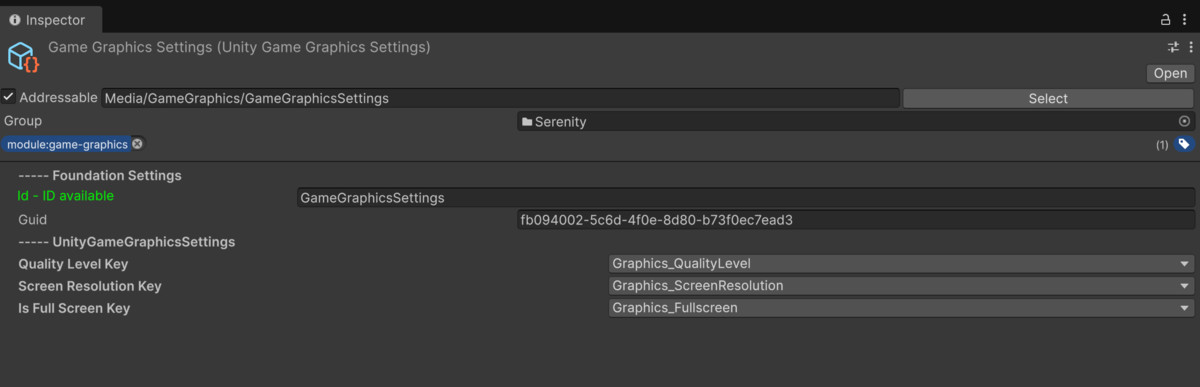
- Settings & Input: Stepped Settings Wizard, Graphics settings, Unity Input System integration, per-player rebinding (local multiplayer), Gyro Aim & Sensitivity options, no-code action→method invoker
- Localization: Unity Localization wrapper + missing-key validator
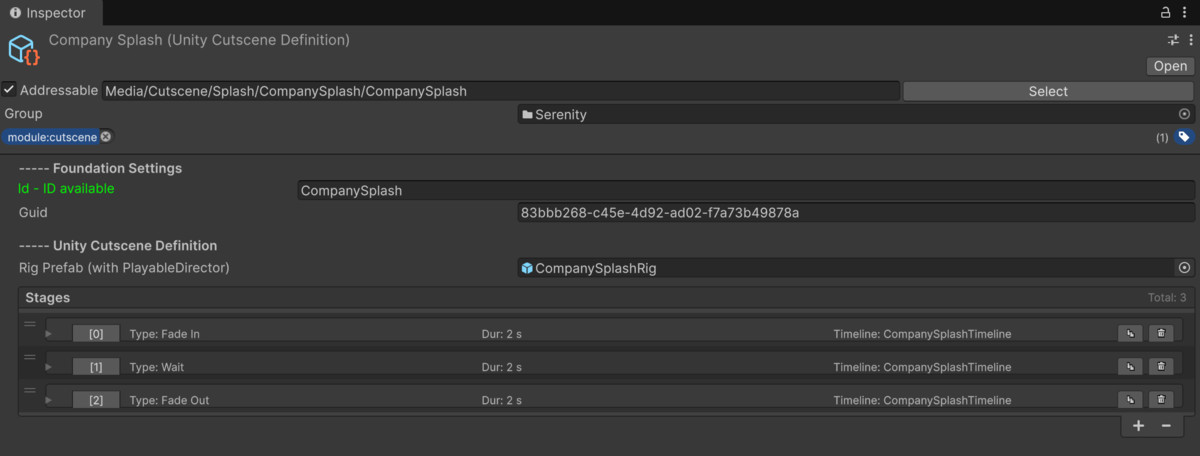
- Narrative: Cutscene Wizard (Timeline), Sequences, no-code cutscene triggers
- Gameplay: Game Modes, Game Session, Stages, Waves, Characters, Spawners, Score, Combo, Checkpoints, Weapons, Rails, Procedural Expression
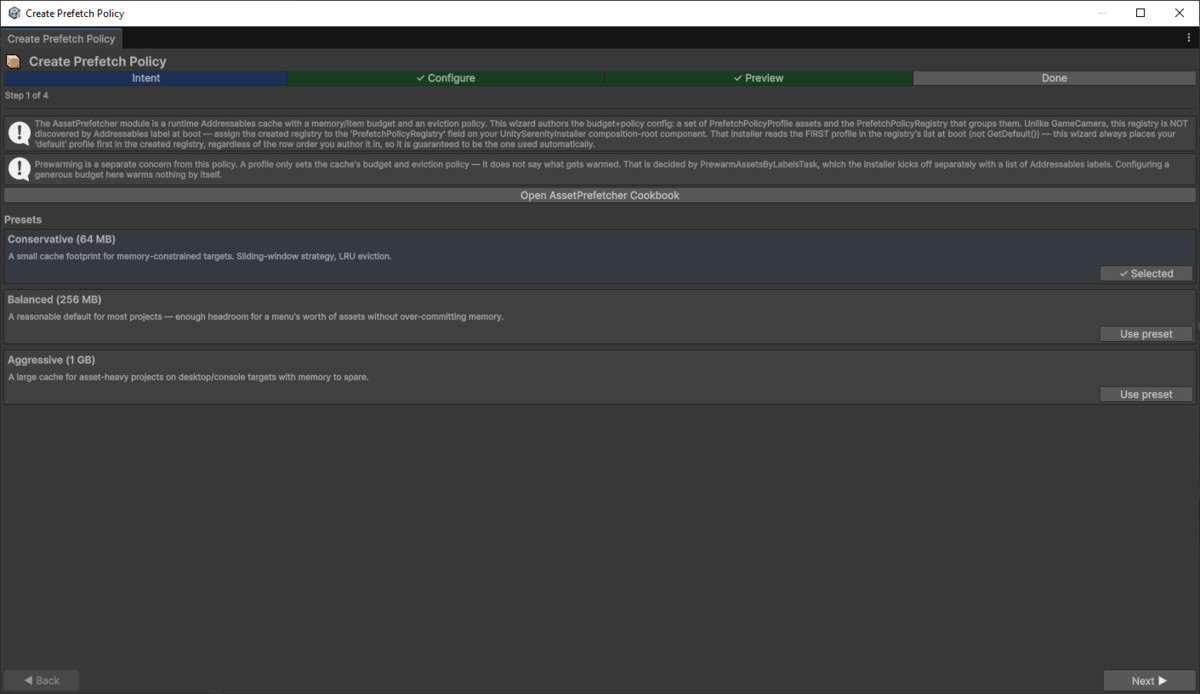
- Core: Initialization Pipeline, Logging, Timers, Tasks, Asset Prefetcher, System Configuration
No-code designer tooling
- Serenity Hub workspace with favorites, recents and Ctrl+K search; Initialize Serenity (boot → menu → gameplay → pause loop), Menu Manager, Modal Builder, Composite View Builder, HUD Builder, Leaderboard View Designer, Create Event (signal + action in one flow), Feedback Builder, Cutscene Wizard, Create Font, Add Language
- Every creation tool is a stepped wizard with an Installation step; all output defaults under Assets/Game (never inside the package folder)
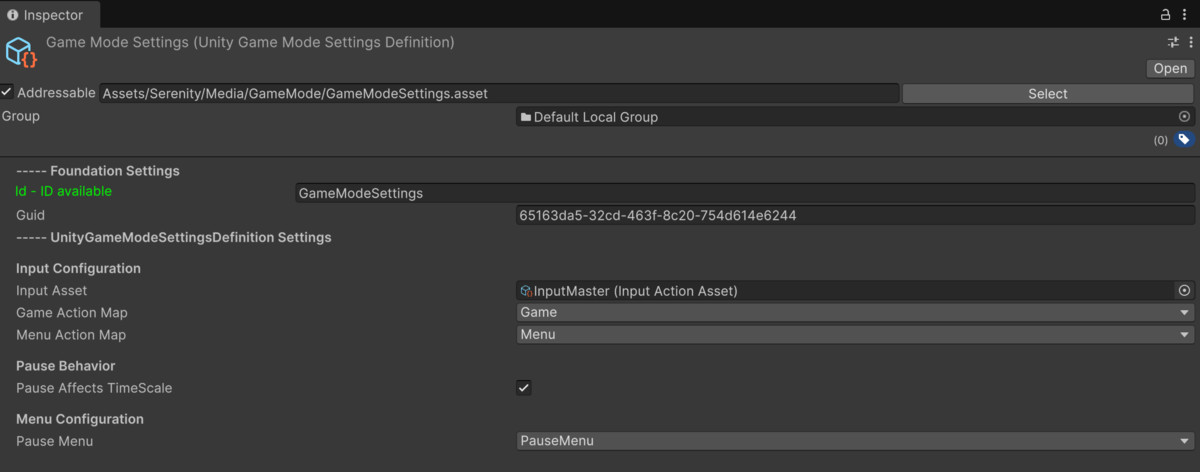
- Signal Reaction / Emitter binders, Signal Flow browser (assets, prefabs and scenes), Health Check dashboard, Broken-Reference report, Validate Everything with one-click fixes, Addressable-key validator, Localization-key validator, GameMode & Init-pipeline overviews + simulator, Mixer Topology viewer, Animation Hub, Gamepad Monitor, Safe Asset Delete, Diagnostics & Player-Join overlays
AI / automation
- Declarative .serenity-recipe.json import/export + template generator (validated, idempotent, reversible via Editor API)
- AI Prompt Builder — interview-driven prompt generation grounded in the project's real assets
- Headless CLI for recipe import, project validation, and discovery dumps (CI / AI-agent friendly)
- Full AI-facing documentation set (45-module map + per-system Cookbooks) and installable agent skills for Claude, Codex, Gemini, Cursor and Copilot
Requirements
- Unity 6000.0 LTS or newer
- Dependencies: Input System, Localization, Addressables, TextMeshPro/UGUI
Compatibility
| Unity version | Built-in | URP | HDRP | Custom |
|---|---|---|---|---|
| 6000.3.10f1 | Compatible | Compatible | Compatible | Compatible |
Compatible with Built-in Render Pipeline, URP, and HDRP.
The package does not include custom shaders or SRP-specific rendering logic.
Visual appearance may vary slightly depending on the active render pipeline, but functionality is unaffected.
As listed on the Asset Store.