
 View on Asset Store (opens in new tab)
Package details
- Latest version
- 2.1.0
- Last updated
- First released
- Unity version
- 2022.3.56 or later
- Package size
- 1.1 MB
- Files
- 44
- Favorites
- 19
- Views in the past week
- 5
Price tracking
- Last checked
- Tracked since
- Lowest recorded
- Free on
Keywords

EzAPI
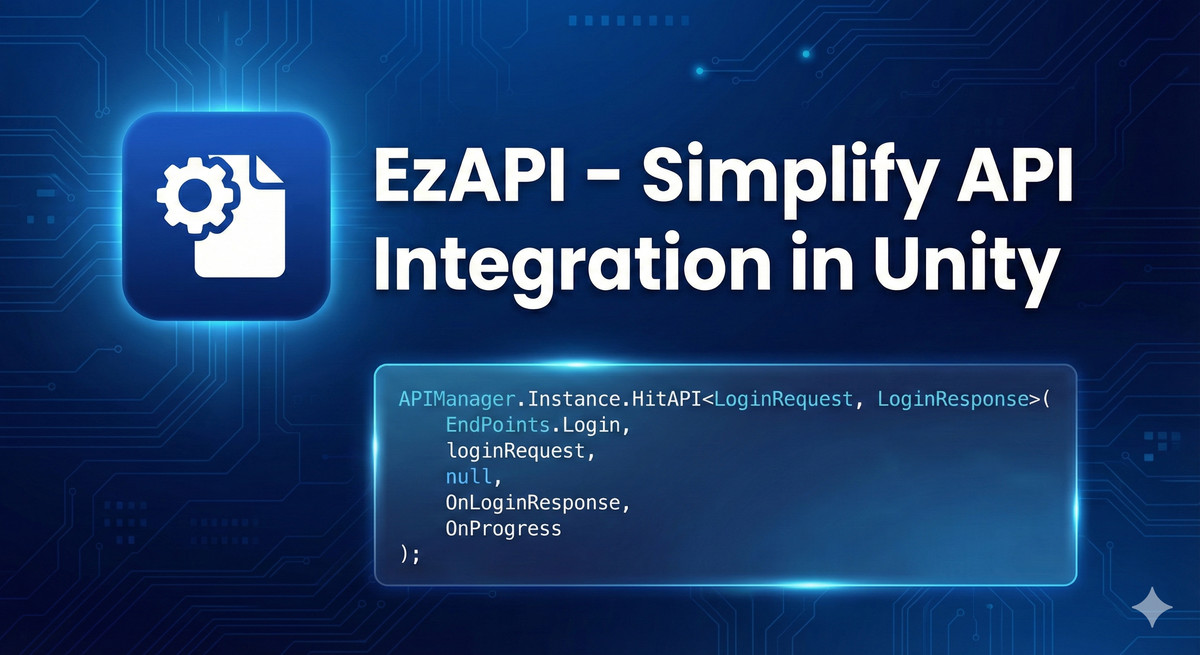
EzAPI is a Unity package for clean REST API calls. Configure endpoints and APIConfigs in the editor, then hit APIs via APIManager or APIClass with queuing, retries, error handling.
Affiliate link · Purchases support this site
Price history
Last 6 months
USDAsset preview
1 / 6
EzAPI screenshot 1
About this asset
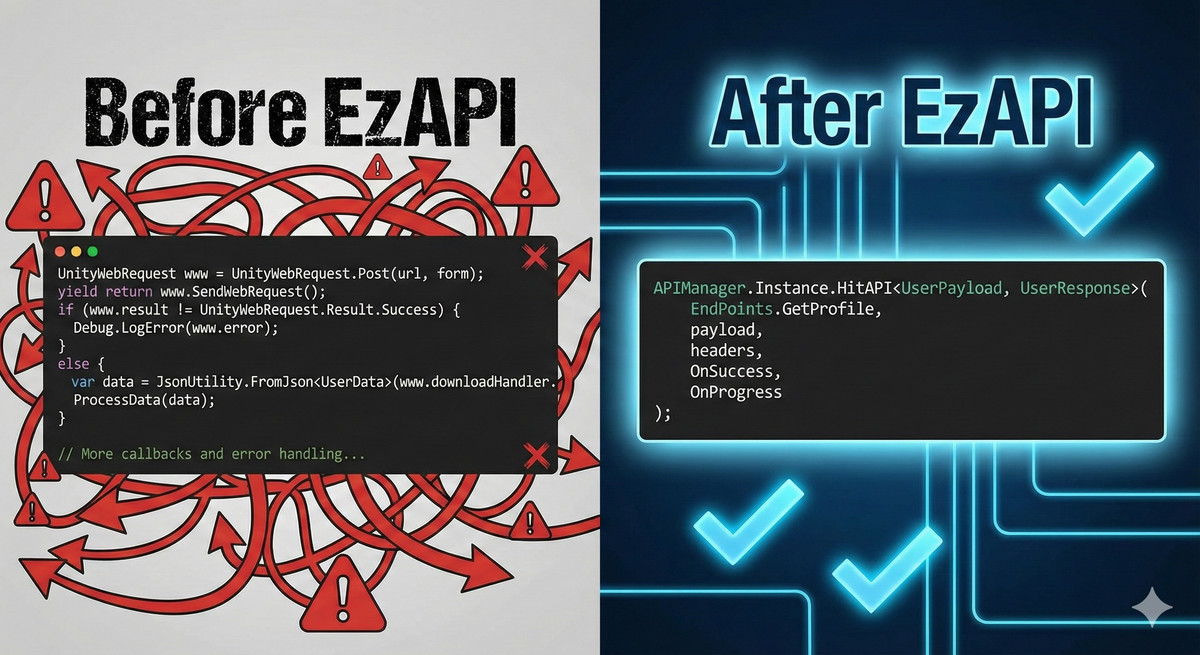
EzAPI is a Unity package that turns messy web requests into a clean, configurable API layer. Instead of scattering `UnityWebRequest` code and hard-coded URLs across your project, you define your endpoints once in an editor Settings window and access them via a type-safe `EndPoints` enum.
You configure base URLs, environments (dev/staging/prod) and behavior using `APIConfig` ScriptableObjects, then swap them per build without touching code. Each API call uses strongly-typed request and response classes that inherit from `RequestPayloadBase` and `RequestResponseBase`, keeping your payloads and results easy to read, debug, and extend.
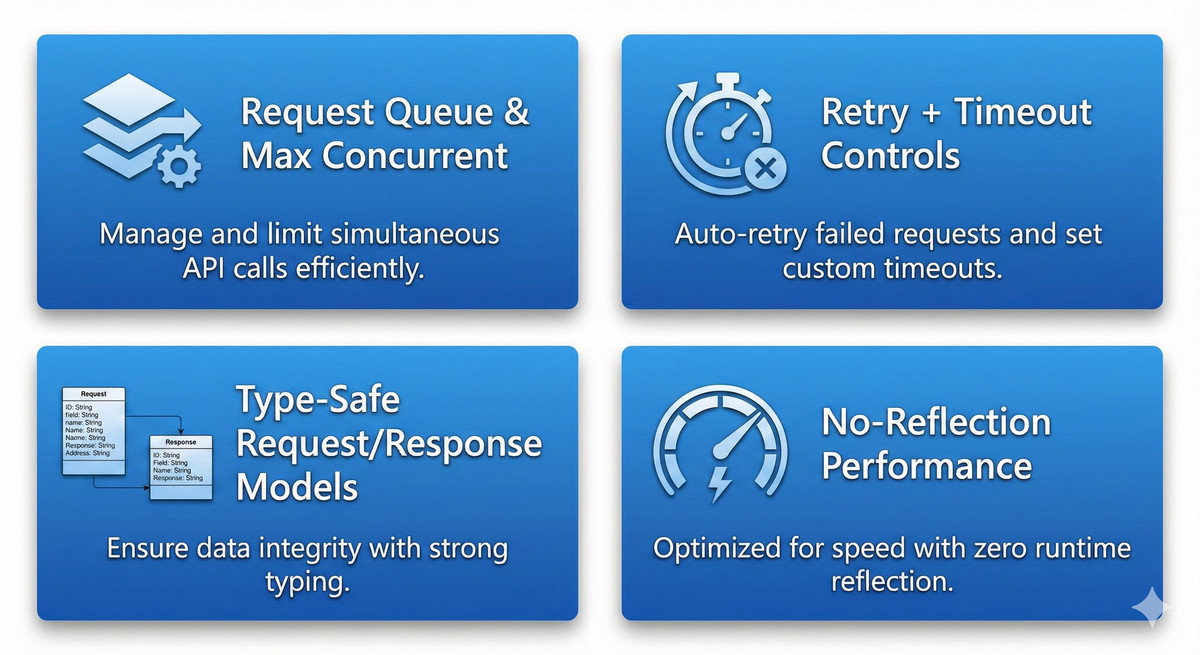
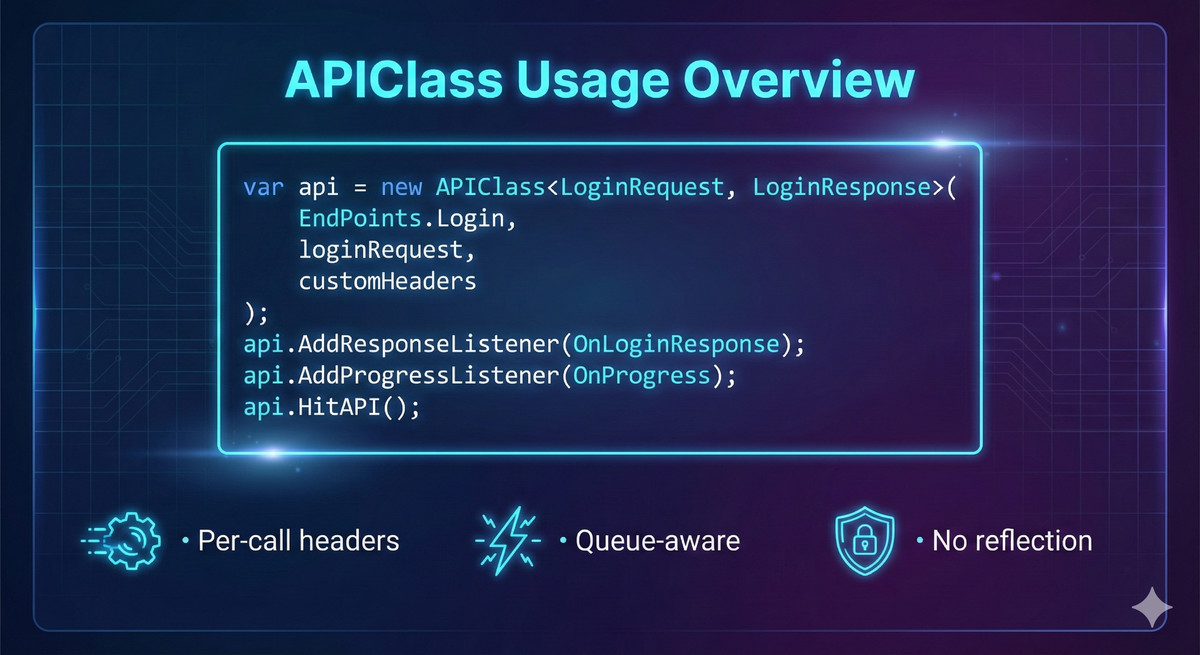
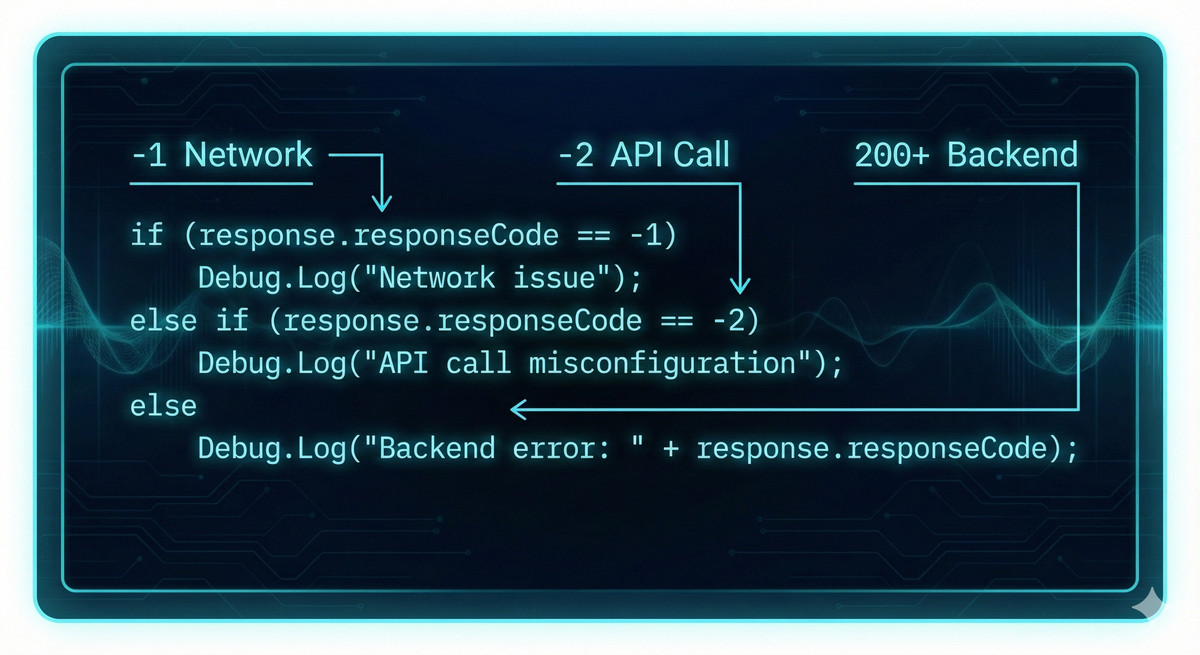
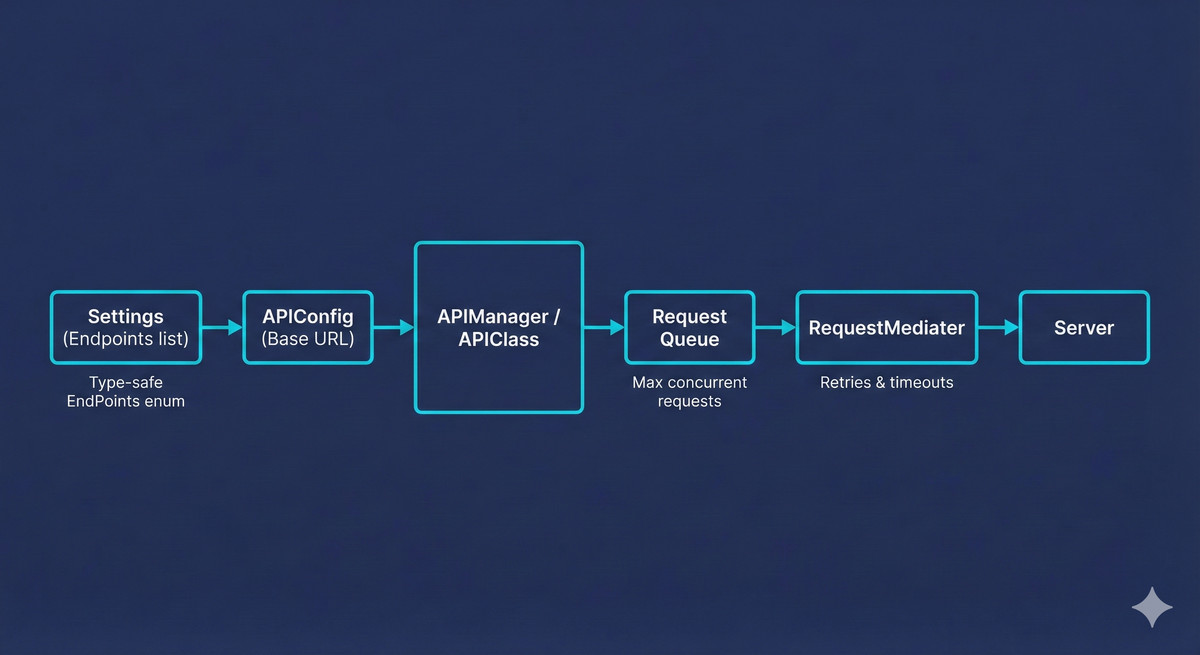
At runtime, you call APIs through `APIManager` (singleton) or `APIClass<TRequest, TResponse>` (per-call object) to add headers, callbacks, and progress listeners. Under the hood EzAPI provides request queuing, configurable max concurrent requests, retries, and structured error codes (`-1` network, `-2` call/config error, others from backend), plus performance improvements by avoiding reflection in `APIClass`. The result is a robust, production-ready API system that lets you focus on gameplay and features instead of low-level networking details.
From the publisher's Asset Store listing.
Technical details
Unity version support: Built for Unity 2020.3+
- Core transport: Wraps UnityWebRequest with a higher-level API for typed requests and responses.
- Type-safe endpoints: Endpoints are configured in an editor Settings asset and exposed as a generated EndPoints enum (no magic strings).
- Config system:
APIConfig ScriptableObject for base URL, timeouts, retry counts, and default behavior.
Multiple APIConfig assets supported for dev/staging/production swaps. - Request/response models:
Request classes inherit from RequestPayloadBase.
Response classes inherit from RequestResponseBase (includes success, responseCode, failureMessage). - API access patterns:
APIManager.Instance.HitAPI<TRequest, TResponse>(EndPoints endpoint, TRequest payload, ...).
APIClass<TRequest, TResponse> instances for per-call configuration (headers, listeners, etc.). - Request queuing & concurrency:
Built-in request queue with configurable max concurrent requests.
Additional requests are queued and processed automatically. - Retry & timeout handling:
Per-endpoint retry configuration via RequestClass + APIConfig defaults.
Timeouts configurable at the config/endpoint level. - Performance optimizations:
APIClass API hits avoid reflection to reduce GC and overhead.
Centralized logic minimizes duplicate UnityWebRequest setup code. - Error semantics:
responseCode == -1: network-level errors (no internet, DNS, etc.).
responseCode == -2: API call / configuration errors (missing endpoint, invalid setup).
Other codes: backend/server HTTP or logical errors. - Editor integration:
Settings window under Tools > EZAPI > Settings for endpoints and config selection.
Tools > EZAPI > Save regenerates the EndPoints enum and persists configuration. - Extensibility & internals:
RequestClass represents endpoint config and can be inspected programmatically.
RequestMediater is an internal static helper for sending requests and handling low-level responses (accessible but not recommended for regular gameplay code).